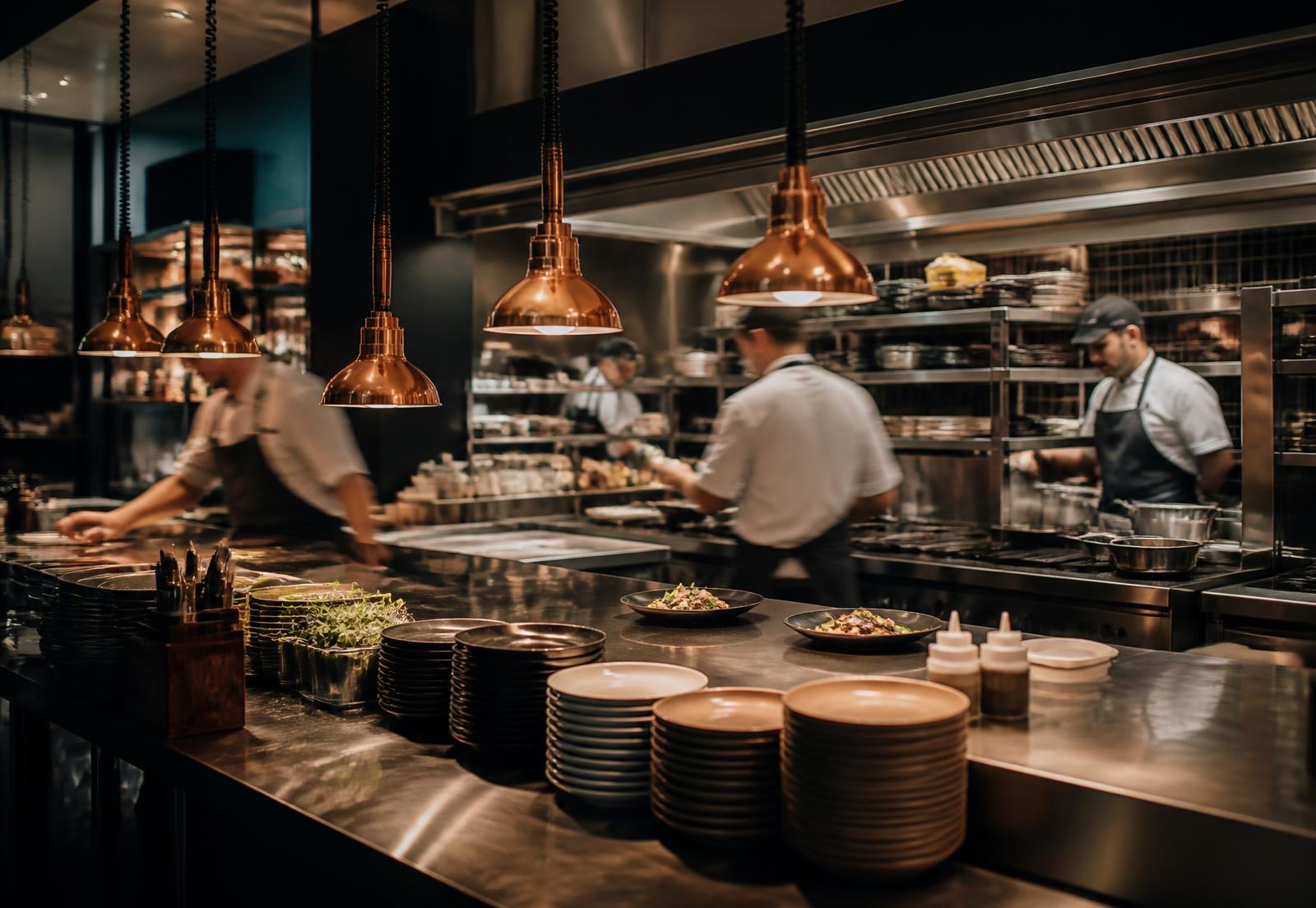
Chefs working the pass in a busy commercial kitchen
Operational safety intelligence

Real-Time Risk Intelligence for Commercial Kitchens

KitchenGuard AI combines environmental and workflow signals to identify rising operational risk in commercial kitchens and provide practical, real-time guidance to kitchen managers and shift leads.

The aim is simple: help teams see risk building while there is still time to act, instead of reviewing what went wrong after service.

Explore the Platform
  • Environmental + workflow intelligence
  • Real-time risk awareness
  • Actionable intervention recommendations
  • Privacy-preserving design

Kitchen risk overview

Illustrative interface — not live data

Low
Medium
High
Temperature

34.8 °C

Humidity

62 %

Noise

78 dB

Ticket backlog

14 open

Shift stage

Dinner peak

Risk level

Medium

Example recommendation

Elevated heat and backlog on the hot line — consider rotating one chef, prompting hydration and pausing non-essential prep.

Kitchen sensors

Temperature · Humidity · Noise

On-site gateway

Local collection

Cloud intelligence

Rules-based fusion

Risk assessment

Kitchen & station level

Manager / shift lead

Human decision

Medium
About

Built for the Reality of Commercial Kitchens

KitchenGuard AI was created around recurring operational challenges experienced in working commercial kitchens — the conditions that quietly raise the chance of an error long before anything visible goes wrong.

Thermal and workload stress

Heat, ventilation limits and sustained physical load build through service.

Increasing service pressure

Ticket volume and backlog compress the time available for careful checks.

Fatigue accumulation

Long shifts, delayed breaks and back-to-back covers change how a team performs.

Static allergen procedures

Procedures stay the same whether the kitchen is calm or at its busiest.

Limited real-time visibility

Operational risk is usually reviewed after service, not while it is rising.

Complements HACCP

KitchenGuard AI is designed to complement existing HACCP and food-safety procedures rather than replace them. Experienced staff remain in control of every decision.

Rupesh Chaudhary

Founder & Managing Director

Rupesh has more than five years of commercial kitchen experience across Nepal and the UK, including his current role as a chef at Hampton by Hilton. That hands-on experience of live service shaped the product around practical, real-world kitchen operations rather than theory.

MSc in Business Management, De Montfort University

Subash Tamang Moktan

Chief Technology Officer

Subash leads technical development across software architecture, the manager dashboard, the mobile application, sensor-data integration and the risk-fusion engine.

A deliberately complementary founding team: hospitality and kitchen expertise paired with software and technical expertise.

Monitor Kitchen Risk, Not Individual Employees

KitchenGuard AI is deliberately privacy-preserving. Risk intelligence is assessed at the kitchen, station and operational-zone level — never as individual employee monitoring. This constraint is a core product design principle, and a key reason teams are willing to have the system in their kitchen.

  • No facial recognition
  • No wearables
  • No individual biometric monitoring
  • No video-based employee surveillance
Platform

One Platform. Multiple Layers of Kitchen Intelligence.

KitchenGuard AI combines sensor data, workflow information and risk intelligence into a single operational view — delivered through a manager dashboard, a shift-lead mobile app and recurring operational reporting.

Risk varies by station

Conceptual kitchen zones — illustrative only

Kitchen: Medium

Hot Line

high

Heat + backlog

Prep

low

Stable conditions

Pass

medium

Ticket pressure

Live Kitchen Risk Dashboard

Managers see an overall kitchen risk level with a traffic-light indicator, station-level detail across hot line, prep and pass, and the main factors contributing to current risk — designed to be understood in seconds during busy service.

  • Overall kitchen risk level
  • Station-level risk
  • Contributing risk factors

Real-Time Prescriptive Alerts

The platform does not simply display a high-risk warning. It translates risk into practical recommendations that stay within the everyday authority of a shift lead.

  • Staff rotation & workload redistribution
  • Hydration reminders
  • Reduce non-essential tasks
  • Additional allergen verification
  • Service-flow adjustments

Manager Reporting Console

Review longer-term operational patterns rather than isolated moments, so changes can be made to how the kitchen is run.

  • Risk trends & high-risk periods
  • Alert response
  • Recurring risk factors
  • Staffing and station/layout opportunities

Mobile Shift Lead Application

A lightweight companion app built for use mid-service — a few taps, no distraction from the pass.

  • Receive alerts
  • Acknowledge and respond to recommendations
  • Enter workflow information
  • Record ticket backlog

Allergen Order Verification Mode

When an allergen order occurs during elevated kitchen risk, the platform can prompt additional verification guidance. It supports your allergen process — it does not independently guarantee allergen safety.

  • Additional confirmation
  • Designated allergen-trained staff
  • Second-person verification
  • Controlled handover

Monthly Operational Insight Report

A concise report that turns a month of operating conditions into decisions about rota, layout and process.

  • Overall risk trends
  • Alert performance
  • High-risk periods
  • Staffing/rota and station/layout considerations
Future / roadmap

Multi-Site Comparison View

Designed for larger operators managing multiple kitchens, providing comparison of operational risk trends between sites. This is a planned capability, not part of the initial MVP.

Core intelligence

The Intelligence Behind KitchenGuard AI

Six modules translate raw kitchen signals into a risk view an experienced manager can act on.

Kitchen-Level Error-Risk Fusion Engine

Combines temperature, humidity, ventilation conditions, noise, ticket volume, order backlog, shift duration and break delays into a continuously updated kitchen risk score.

Thermal-Cognitive Load Intelligence Engine

Evaluates heat exposure, communication demand, order complexity and workload to identify stations experiencing elevated combined pressure.

Fatigue-Triggered Allergen Protection Engine

Combines fatigue-related indicators, workload, kitchen risk and allergen orders to determine when additional allergen verification may be appropriate.

Shift-Stage Risk Prediction Engine

Recognises that risk varies by stage of shift — pre-service preparation, breakfast, lunch rush, dinner peak, banquet production and end-of-shift clean-down.

Privacy-Preserving Kitchen Fatigue Intelligence Engine

Assesses fatigue-related operational risk without individually monitoring employees through biometrics, wearables, facial recognition or video surveillance.

Prescriptive Kitchen Intervention & Safety Optimisation Engine

Converts detected risk conditions into practical actions: staff rotation, hydration, workload redistribution, allergen segregation, reduction of non-essential tasks and service-flow adjustments.

Current capability

Designed for a Practical First Deployment

The initial MVP uses commercially available sensor components and mainstream cloud infrastructure to reduce technical risk and enable faster pilot deployment. Risk scoring is transparent and rules-based.

Temperature sensors

Humidity sensors

Noise sensor

Manual ticket-backlog input

On-site gateway

Cloud risk-fusion engine

Dashboard + mobile alerts

Initial MVP

  • Temperature sensing
  • Humidity sensing
  • Noise sensing
  • Manual ticket backlog input
  • Risk fusion
  • Manager dashboard
  • Shift-lead alerts

Future roadmap

  • POS / Kitchen Display integration
  • Supervised machine-learning refinement
  • Multi-site dashboards
  • Anonymised cross-kitchen benchmarking

Roadmap capabilities are planned, not currently available.

Three-year plan

Where the Platform Goes Next

Year 1

Foundation & Pilot Validation

  • MVP development
  • Sensor deployment
  • 3–5 pilot kitchens
  • Calibration
  • Pilot validation
  • Initial commercial customers
Year 2

Early Commercial Scaling

  • Wider customer acquisition
  • POS integration
  • Machine-learning refinement
  • Enterprise licensing
  • Expansion of customer base
Year 3

Expansion & Category Establishment

  • Wider UK geographic footprint
  • Anonymised cross-kitchen benchmarking
  • Enhanced multi-site licensing
  • Hotel groups and contract catering
  • Stronger insurer/trade-body relationships
  • Evaluation of international expansion

KitchenGuard AI operates through recurring software subscriptions, sensor hardware and implementation, calibration and training services — with multi-site licensing for larger operators.

How it works

From Kitchen Signals to Practical Action

Eight connected stages take a kitchen from first assessment through to continuous, human-led operational decisions.

  1. Step 01

    Assess

    KitchenGuard AI evaluates the kitchen environment, operational setup and pilot requirements.

  2. Step 02

    Install

    A starter sensor kit is installed in appropriate kitchen locations and connected through an on-site gateway.

  3. Step 03

    Calibrate

    The system establishes a kitchen-specific baseline from normal operating conditions and workflow patterns.

  4. Step 04

    Monitor

    Environmental and workflow signals are collected continuously: temperature, humidity, noise, ticket backlog, shift duration, break patterns and service stage.

  5. Step 05

    Analyse

    The risk-fusion engine combines available signals into a continuously updated kitchen risk assessment.

  6. Step 06

    Alert

    When risk reaches defined thresholds, the platform presents an appropriate alert or recommendation.

  7. Step 07

    Act

    The shift lead or manager decides whether to rotate staff, redistribute workload, provide hydration, add allergen verification, adjust service flow or reduce non-essential work.

  8. Step 08

    Learn

    Responses and operational information are logged to support reporting, calibration and future model refinement.

Market pricing

Simple Pricing for Different Kitchen Environments

Recurring software subscriptions, with sensor hardware priced separately so kitchens can start with a single site.

Independent Restaurant

£79/ month

For single-site independent restaurant kitchens.

  • Designed around the needs of independent commercial kitchens
  • Live kitchen risk dashboard
  • Real-time prescriptive alerts
  • Mobile shift-lead application
  • Monthly operational insight report

Hotel Kitchen

£199/ month

For single-site hotel kitchens.

  • Built for hotel kitchen environments requiring broader station-level coverage
  • Station-level risk across hot line, prep and pass
  • Manager reporting console
  • Allergen order verification mode
  • Monthly operational insight report

Multi-Site Group

Custom Pricing

For operators managing 5 or more kitchens under a commercial agreement.

  • Per-site subscription discounts
  • Consolidated multi-site reporting
  • Custom bulk hardware pricing

Hardware — separate from software subscription

Starter Sensor Kit

£450 one-offor£15 / month lease

The lease is structured over three years.

Additional services

  • Calibration services
  • Staff training
  • Implementation services
  • Premium services

Pricing shown reflects the current business plan and may be refined as pilot and early customer data becomes available.

Who it is built for

Independent restaurants and small hotel kitchens are the primary early commercial focus.

  • Independent Restaurants

    Especially kitchens with complex dishes and significant allergen exposure.

  • Small Hotel Kitchens

    Including branded budget and mid-market hotel kitchens.

  • Future Expansion

    Contract catering operators, small multi-site restaurant groups, hotel groups, and care home or institutional kitchens as a longer-term adjacent segment.

Business plan projections

Forward-looking figures from the KitchenGuard AI business plan — not current company achievements or guaranteed results.

Year 1

~14 average active kitchens

£100,500

Year 2

~180 average active kitchens

£433,000

Year 3

~410 average active kitchens

£882,300

FAQ

Questions Operators Ask First

Straight answers on scope, privacy, current capability and cost.